


In an era where technological advancements are rapidly transforming the world around us, artificial intelligence (AI) has emerged as a game-changer in various industries. One of the areas where AI is making a profound impact is in enhancing security systems. Traditional security measures are evolving, and AI-driven solutions are paving the way for smarter, more proactive, and more efficient security strategies. In this article, we’ll explore the significant role of AI in enhancing security systems and the benefits it brings to creating safer environments.
AI is making big leaps in the security industry particularly in the realms of cyber-security and the protection of data, the cloud, and the digital operations of a business. The cross-over between cyber security and physical security infrastructure is with the IoT (Internet of Things) and the use of smart security systems and buildings that use device data and automation to make efficiencies and improved site security decisions. Recent data highlights the scale of this shift; according to the UK Government Cyber Security Breaches Survey 2024, 50% of UK businesses have reported experiencing some form of cyber breach or attack in the last 12 months, driving a surge in AI-driven defensive adoption. Furthermore, research indicates that 53% of enterprises rely on AI-based solutions for IoT security. This integration is particularly vital for high-risk environments such as logistics and distribution centres, where the blend of physical assets and digital tracking requires seamless protection.
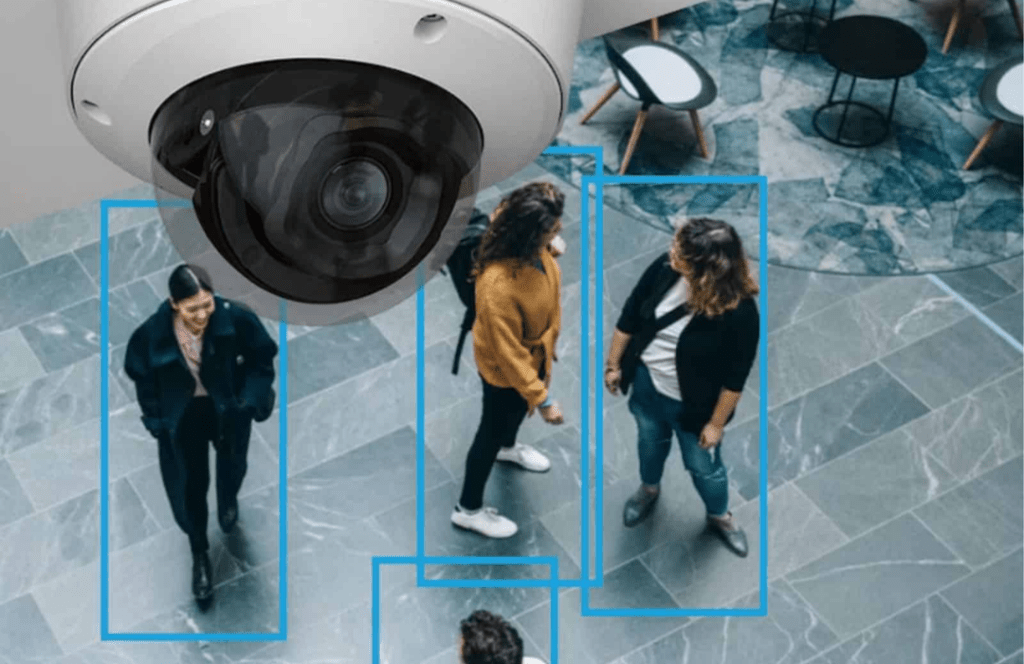
We have identified 6 ways in which AI can enhance security systems.
AI-powered security systems have revolutionised surveillance and monitoring capabilities. Traditional CCTV cameras have limited effectiveness in identifying potential threats. However, AI-based video analytics can detect and analyse unusual behaviour, identify objects, and recognise faces with remarkable accuracy. Real-time monitoring becomes more efficient, enabling security personnel to respond swiftly to potential security breaches. In the retail sector, this technology is increasingly used not just for loss prevention, but to understand customer flow and density.
AI algorithms can analyse vast amounts of data from multiple sources, including security cameras, sensors, access control systems, and historical data. By continuously analysing patterns and trends, AI can predict potential security threats and alert security teams before incidents occur. This proactive approach enhances overall security and reduces response times in critical situations. Modern predictive maintenance in security systems also ensures that hardware remains operational, using AI to flag potential equipment failures before they create a gap in your site’s protection.
AI-driven facial recognition technology has significantly enhanced access control systems as it enables seamless identification of authorised personnel and visitors which enhances the overall security of restricted areas. Facial recognition not only offers convenience but also prevents unauthorised access, minimising the risk of security breaches. For many organisations, cloud-based security is proving safer than on-premise as it allows for instant updates to access databases across multiple sites, ensuring that biometrics and credentials are always current.
Security systems powered by AI can learn and recognise normal behaviour patterns within a specific environment. Any deviation from these patterns, such as unexpected movements or abnormal activities, triggers alerts for further investigation. This behavioural analysis and anomaly detection help identify suspicious behaviour and potential threats in real-time. In particular, this is used to enhance CCTV systems. This is especially useful for healthcare facilities, where monitoring patient safety and restricted medicines requires a nuanced understanding of “normal” versus “concerning” movement.
With the help of AI, security systems can differentiate between harmless movements, such as leaves rustling in the wind, and actual security threats, like unauthorised intrusions. Smart intrusion detection reduces false alarms, thus improving business productivity, and ensuring that security personnel focus on genuine security concerns. Understanding intruder response procedures is still vital for staff, but AI acts as a reliable first filter, ensuring that those procedures are only activated when a verified threat exists.
AI can work to streamline security operations by automating repetitive tasks, freeing up human resources to focus on critical decision-making. Additionally, AI can be integrated with other security systems, such as access control, intruder alarms, and emergency response, to create a cohesive and synchronised security ecosystem. This level of connected managed services ensures that if an intruder alarm is triggered, cameras automatically focus on the zone and access points are locked down instantly.

Beyond physical security, AI is revolutionising how businesses manage fire safety and life protection. Modern fire alarm systems now utilise AI-driven smoke and heat sensors that can differentiate between steam or dust and actual smoke, significantly reducing the disruption caused by false evacuations. For property managers, keeping up with fire safety compliance involves leveraging these smart technologies to maintain digital logs and automated testing schedules. The National Fire Protection Association notes that AI can model fire spread in real-time, providing emergency services with critical data before they even arrive on site. This holistic approach to safety is becoming a standard expectation for property management firms looking to protect both high-value assets and human life.
The integration of AI in security systems represents a significant leap forward in creating smarter and safer environments, and it is already well underway. From advanced surveillance and predictive analytics to facial recognition and automation, AI is transforming the way we approach security and enhancing security system and their capabilities. With the ability to analyse vast amounts of data, identify threats in real time, and enhance overall situational awareness, AI empowers security teams to stay one step ahead of potential risks.

As technology continues to evolve, the role of AI in security will only grow, setting the stage for a safer and more secure future. Embracing AI-driven security solutions is not just a choice but a necessity for businesses and organisations, as it fortifies the defence against ever-evolving security challenges. Exploring commercial security trends reveals that AI is no longer a luxury, but a core component of a resilient risk management strategy.
If you’re interested in our smart security solutions, powered by AI then get in touch today. Call us on 0330 094 7404 or get in touch online here.


