


There are two fundamental approaches to safeguarding lives and property when it comes to fire safety – active fire protection and passive fire protection. While active fire protection involves the use of systems like sprinklers and fire extinguishers to suppress or extinguish flames, passive fire protection is a crucial aspect that focuses on containing the spread of fire, limiting its damage, and providing additional time for evacuation. In this blog post, we will delve into the concept of passive fire protection and explore its importance in creating a comprehensive fire safety strategy.
Passive fire protection encompasses a range of structural and material elements integrated into a building’s design and construction to hinder the rapid spread of fire and smoke. It is an aspect of fire safety that’s under lots of scrutiny and focus at the moment, especially after tragedies like Grenfell Tower. According to the Home Office, fire and rescue services in England attended 165,697 fires, highlighting the persistent need for robust structural defences.
Unlike active fire protection measures that require human intervention, passive systems work automatically and act as a first line of defence, giving occupants more time to escape and emergency responders more time to control the situation. This is particularly vital in complex environments like the healthcare sector, where patient mobility may be limited. It is therefore an important part of a business’s and building’s fire safety strategy.
Fire-rated or fire-resistant walls are constructed using materials that resist fire and prevent its easy transmission from one part of a building to another. Fire-rated doors are designed to withstand fire for a specified period, allowing for controlled evacuation. Both fire walls and doors therefore prevent fire from advancing rapidly and are important in preventing the spread of fire and helping to contain it if it does break out. To remain effective, these assets require regular fire door maintenance to ensure they close correctly and maintain their integrity during an emergency.

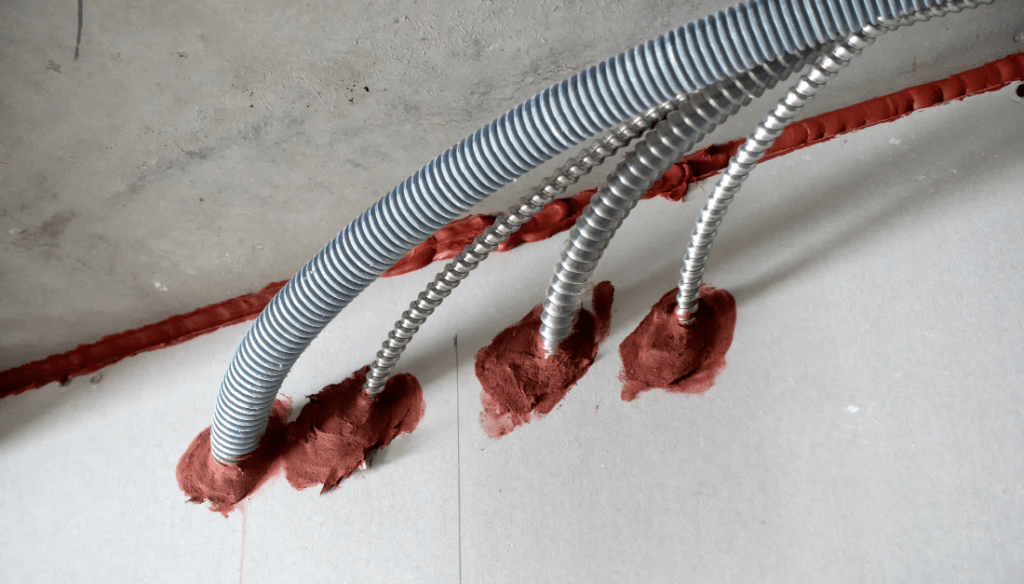
Firestops and penetration seals are barriers placed within the building’s structure to seal gaps around pipes, ducts, and cables, preventing the spread of fire and smoke through these openings. Implementing professional fire stopping and sealing is critical, as even the smallest breach in a fire-rated wall can allow toxic smoke to bypass defences.
Windows and glass doors can be equipped with fire-resistant glazing to maintain their integrity during a fire, preventing flames and smoke from spreading, as well as added injury and damage through smashed glass.
Structural elements, such as steel and concrete, can be coated with fire-resistant materials to enhance their ability to withstand high temperatures and protect the building’s integrity, preventing collapse. This is a common requirement in industrial factory environments where structural steel is prevalent.
Dividing a building into compartments with fire-resistant barriers helps contain the fire within a specific area. This limits its impact on the entire structure and is an effective form of passive fire protection. For those managing complex layouts, fire compartmentation surveys can identify where these barriers may have been compromised by building works or age.

The primary goal of passive fire protection is to ensure the safety of occupants by slowing down the spread of fire and providing sufficient time for evacuation. It can therefore reduce mortality rates within incidents of fire, and understanding passive fire protection fundamentals is the first step in creating a safe environment for your staff and visitors.
By preventing a fire from spreading and containing it to its point of origin, passive fire protection helps to minimise property damage, and therefore reduces the financial and emotional toll on building owners, businesses and occupants. The economic cost of fire in England remains significant, with structural losses accounting for billions of pounds in insurance claims annually. To further mitigate these risks, many organisations are now exploring predictive maintenance in fire safety systems to catch potential vulnerabilities before an incident occurs.
For commercial establishments, the implementation of passive fire protection measures is essential for ensuring business continuity. It minimises business downtime by preventing extensive damage and facilitating a faster recovery. Integrating these structural measures with advanced technology, such as IoT and real-time analytics for fire detection, allows for a more responsive and resilient safety network. Learning how to develop a business continuity plan that includes both fire and security considerations is paramount for long-term stability.
Many building codes and regulations require the incorporation of passive fire protection measures. Compliance not only ensures the safety of occupants but also avoids legal complications for building owners. The Fire Safety Order 2005 states all the current UK legislation when it comes to fire safety.
Furthermore, with the introduction of the Building Safety Act, there is an increased focus on the “golden thread” of information regarding a building’s safety systems. It is essential to stay updated on fire safety trends to ensure your premises meet the evolving expectations of insurers and the Building Safety Regulator. Failing to maintain these standards can lead to severe penalties or invalidation of insurance policies. Building owners should also regularly carry out comprehensive fire risk assessments to identify any gaps in their passive protection strategy.
Passive fire protection is a cornerstone of comprehensive fire safety strategies, playing a critical role in protecting lives, property, and the continuity of businesses. At BusinessWatch, we support building owners and businesses with all aspects of fire safety including passive fire protection, that adheres to current regulations and standards. By investing in these measures, organisations can contribute to creating safer environments and resilient structures that can withstand the challenges posed by fire incidents.
If you want to know more or discuss passive fire protection with the team, get in touch. Call us on 0330 094 7404 or you can click here.


