

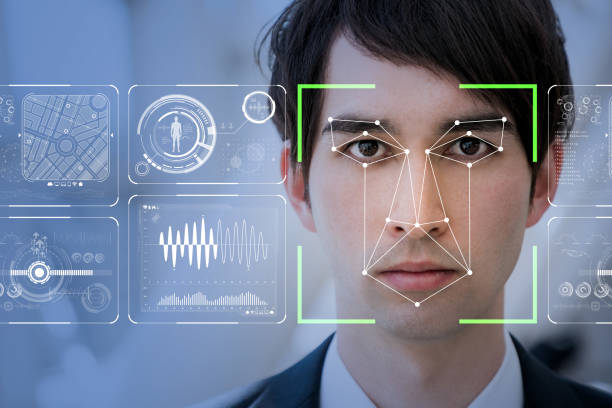
Smart technology is growing in sophistication and ability every day, and becoming commonly used in our day-to-day lives. Its integration and use within commercial security is no different and is proving to maximise the potential of commercial security systems. In this article, we take a look at how smart technology is shaping the future of commercial security as well as its benefits and real-life applications.
Smart technology refers to advanced systems and devices that use artificial intelligence (AI), the Internet of Things (IoT), and data analytics to operate autonomously, learn from user interactions, and improve functionality over time. These technologies are interconnected, enabling them to collect, process, and share data seamlessly without the need for human intervention. Examples include smart home devices like thermostats and security cameras, smart industrial machinery, and intelligent personal assistants like smartphones.
Smart technology enhances efficiency, convenience, and decision-making for individuals and businesses by providing real-time insights and automated responses, transforming various aspects of daily life. In a commercial context, this level of automation ensures that protection is never compromised by human fatigue or oversight.
The acceleration of digital transformation has led to a massive increase in connected infrastructure. Current projections from indicate that the number of IoT connected devices will reach nearly 40 billion by 2030, a significant jump from earlier estimates. The rise of smart security systems has risen due to their many benefits and ability to improve efficiencies within businesses. Nearly all new security systems will have an aspect of smart technology integrated within them and they continue to prove to create a comprehensive and proactive approach to security.
Traditional security systems are often reliant on human monitoring and basic alarm systems. With smart security systems, these traditional aspects are being augmented or replaced by intelligent solutions that offer real-time insights and responses with the use of smart technology by utilising AI, IoT, and data analytics to detect, analyse, and respond to security threats with greater speed and accuracy that act to better protect a site or business. This evolution is particularly important as commercial security trends shift towards more autonomous and cloud-based infrastructures.
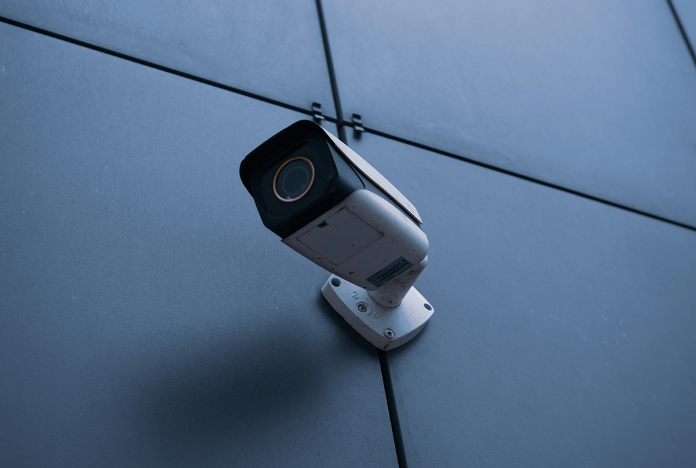
AI and machine learning are at the very core of smart security systems. These technologies enable systems to learn from historical data, identify patterns, and predict potential security breaches, all without the need for human intervention. For example, AI-powered video surveillance can analyse footage in real-time, recognise unusual behaviours or activities, and alert security personnel before an incident occurs. This predictive capability significantly reduces response times and enhances the overall effectiveness of security measures. Beyond standard visual monitoring, AI can now provide predictive maintenance in fire safety systems, identifying a potential hardware failure before it results in a system downtime.
The IoT connects various devices and sensors to create an interconnected network that can communicate with each other and monitor and manage security across a commercial site. IoT devices, such as smart cameras, access control systems, and environmental sensors, continuously collect data and communicate with each other to allow for a more holistic view of a site’s security, enabling real-time monitoring and coordinated responses to threats.
For example, if a smart camera detects activity during out-of-hours in one area, it may trigger the access control system to lock down any escape routes to help catch a potential intruder. This synergy between different hardware components is a cornerstone of connected managed services, ensuring that every piece of security equipment works as part of a unified ecosystem.
Smart security systems generate a vast amount of data, and advanced analytics help to process this by analysing this data. From it, businesses will gain valuable insights into potential vulnerabilities of their site security and can therefore optimise their security protocols.
For example, analysing access logs can help identify unauthorised attempts to enter restricted areas, while environmental sensors can detect anomalies such as unexpected temperature changes that may indicate a fire or other hazards. Modern systems now utilise real-time analytics and IoT sensors for fire detection, providing a much higher level of precision than legacy smoke detectors.

When we look at how smart technology is shaping the future of commercial security, the benefits businesses can reap are a great part of it.
The initial investment into smart security technology can be significant, however the long-term cost savings are substantial. Automated systems reduce the need for extensive human surveillance, lowering labour costs and the need for a physical team. Moreover, the ability to prevent security breaches and mitigate damages can result in significant financial savings for businesses. Many companies find that their insurance premiums are positively impacted by fire safety and security improvements, as modern, monitored systems represent a lower risk to providers. Energy efficiencies can also be achieved via the communication of internal systems.
Smart security solutions are highly scalable and can be tailored to the specific needs of a business. Whether it’s a small retail shop or a large corporate site, these systems can be customised to provide the appropriate level of security very easily. Additionally, as businesses grow and evolve, smart security systems can be easily expanded or upgraded to meet changing requirements. This flexibility is vital in the modern era of the hybrid workspace, where building occupancy levels fluctuate and security needs change daily.
The data collected by smart security systems provides valuable insights that can inform decision-making processes for a business. They can use their data to identify trends, assess the effectiveness of security measures, and make informed decisions about future investments in their security infrastructure. This transparency helps in preparing for fire safety certification and other regulatory audits by providing a clear digital audit trail of all system activities.
Smart security systems provide superior threat detection and response capabilities compared to traditional security systems. This is because AI-driven analytics can identify potential security breaches with high accuracy, 24/7, reducing the likelihood of false alarms, which can outperform human ability. Additionally, automated responses, such as locking doors or notifying law enforcement, can be triggered instantly, minimising the impact of security incidents and human error. In the last year, UK government crime statistics recorded over 400,000 incidents of shoplifting, highlighting the urgent need for these high-accuracy automated systems.

Several industries are already reaping the benefits of smart technology for their commercial security. Here are a few examples:
In the retail sector, smart security systems are used to prevent theft, monitor customer behaviour, and enhance overall site security. AI-powered cameras can detect suspicious activity like shoplifting and alert store managers in real time. Additionally, data analytics can help retailers optimise shop layouts and improve customer service. Integrating these tools allows for a much more customised security solution for retail businesses, moving beyond simple cameras to intelligent loss prevention.
Corporate offices employ smart security solutions to control access to sensitive or restricted areas, monitor employee activities, and protect valuable assets. Biometric access control systems, such as fingerprint and facial recognition ensure that only authorised personnel can enter restricted areas. IoT sensors can also monitor environmental conditions, such as air quality and temperature, to maintain a safe and comfortable working environment. These systems are essential for high-rise office buildings where managing thousands of daily movements requires seamless, automated oversight.
In manufacturing and warehousing, smart security technology helps protect valuable inventory and equipment. IoT sensors can detect unauthorised access to storage areas and monitor the movement of goods within a facility. Additionally, AI-driven analytics can identify potential safety hazards and ensure compliance with industry regulations. Given the scale of these sites, logistics and distribution centres rely heavily on smart integration to maintain 24-hour security across vast perimeters.
At BusinessWatch, we are experienced in installing, monitoring and managing smart security systems for commercial sites. We are constantly on top of the latest technologies and passionate about finding bespoke solutions to suit your business needs. Our team ensures that all installations meet the highest standards, including industry-recognised accreditations, providing you with peace of mind that your infrastructure is both compliant and future-proof.
Get in touch to speak to one of our security experts who will be happy to answer any of your questions on 0330 094 7404.


