

So, just how important is fire alarm monitoring to a business? Is it just another unnecessary expense?
Thousands of businesses across the UK have fire alarm systems installed. The systems give them early warning in the event of a fire, protecting their people, property and business. During working hours, a fire alarm activation will alert employees on site to a fire situation. When appropriate, an emergency call to the fire brigade will be made. The fire brigade will usually arrive on-site within a few minutes. Within high risk environments, the fire brigade will automatically attend. However, for lower risk sites where monitoring is in place, the fire brigade will attend on confirmation of a fire.
During working hours, this is fine as the staff on-site can confirm if there is in fact a fire. They can then take the appropriate action. To ensure staff are fully prepared for any event, you might find our guide on creating fire safety champions helpful.
Now, imagine the following scenario. A business has a fire alarm system installed, in accordance with regulatory requirements. They carry out the weekly tests and they also have a maintenance contract in place to ensure the fire alarm stays in perfect working order. All this is at cost to the business. However, there is no fire alarm monitoring and they close the building at the end of each working day for the night, or the weekend, or even longer in the case of festive holidays.
If a fire took hold during these unoccupied hours the system would still activate and trigger the sounders. However, there’s nobody there to take the appropriate action. The fire will most likely spread and become a major incident. And by the time someone notices a bright orange glow whilst passing and alerts the fire brigade, it may be too late to save anything. This highlights the critical nature of having effective security measures in place when premises are empty, a factor that is often overlooked in business continuity planning.
The latest data from the UK Government shows that fire and rescue services in England attended over 38,000 building fires in the last year, a figure which underscores the continuous threat to commercial properties. When a fire strikes a business, the financial consequences are severe. According to a report by the Fire Industry Association (FIA), fires cost the UK economy an estimated £12 billion annually, with the average loss from a single major fire incident soaring to over £657,000. These figures illustrate that a fire is not just a building loss; it’s an economic catastrophe.
Studies consistently indicate that up to 70% of businesses involved in a major fire either do not reopen, or subsequently fail within three years of the incident.
This stark statistic reinforces the necessity of advanced protective measures. Fire alarm monitoring, specifically, acts as an essential fail-safe, bridging the critical gap between detection and emergency response when a site is unoccupied. Considering the significant rise in false alarms due to apparatus, which increased by nearly 5% in the last year according to the Home Office, a monitored system can also help in the verification process, ensuring the fire service is only called when a genuine threat is confirmed, a feature that is vital for businesses in high-traffic or multi-occupancy buildings such as those in the property management sector.
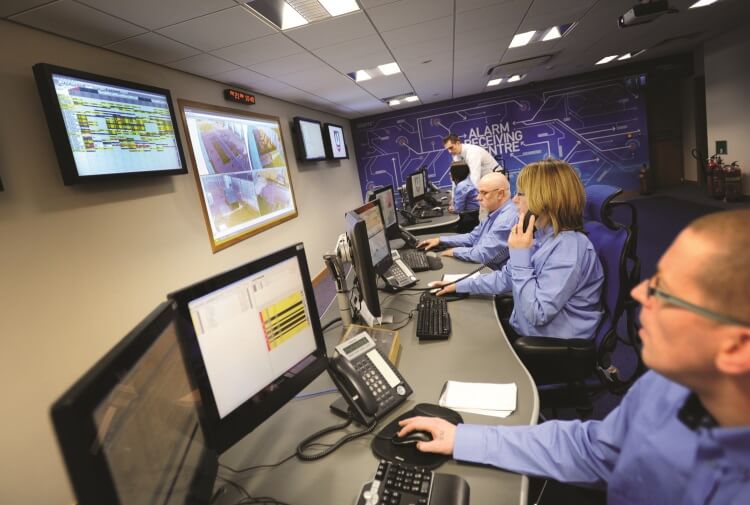
Fire alarm monitoring connects your automatic fire detection system to an Alarm Receiving Centre (ARC). This enables them to call the emergency services within seconds of the activation of a heat or smoke detector. Modern ARCs utilise sophisticated technologies like IP and GPRS signalling to ensure a connection is maintained even if traditional phone lines are compromised, providing an enhanced level of system redundancy that traditional bell-only alarms simply cannot offer.
The value of this immediate notification cannot be overstated. A few minutes’ delay can mean the difference between a minor incident and complete operational failure. For sectors where business continuity is paramount, such as logistics or manufacturing and factory environments, minimising downtime is a direct measure of survival. Therefore, investing in solutions that ensure the fastest possible response, like a comprehensive fire monitoring package, is not just a compliance issue, but a core strategic decision for business resilience. To better understand the different technologies available for early warning, you can review our guide on the future of fire detection sensors and real-time analytics. The integration of advanced fire detection systems, which may include solutions like gas fire suppression for data-sensitive areas, is increasingly becoming standard practice for preventing catastrophic losses, particularly in the utilities sector where infrastructure protection is key. Furthermore, the role of a quality fire safety provider is highlighted by the fact that only 58% of non-domestic fire safety audits were deemed satisfactory in the last year, showing a significant compliance challenge for UK businesses that can be mitigated by professional management.
This could be the difference between going to work the following day to find the smouldering shell of your work place, no job for either you or the staff that depend on you as the business is gone, or arriving to find a small issue was dealt with overnight and suffering some disruption whilst repairs and clean up take place. For a deeper dive into the legal implications, read our post on understanding legal responsibility in fire incidents at work.
In comparison, the cost of monitoring your fire alarm is negligible versus the cost of losing your business. To explore how different systems impact your overall safety strategy, take a look at our comparison of wired versus wireless fire alarm systems. Ultimately, fire alarm monitoring protects not just your premises, but your people, your revenue stream, and your brand’s reputation, offering a return on investment that far outweighs the premium.
Would you be one of the 70%? Learn more about the specific requirements for your industry on our dedicated sectors page.
If you would like to discuss fire alarm monitoring or receive a no obligation quotation, please contact one of our Fire & Security Consultants on 0330 094 7404.


