

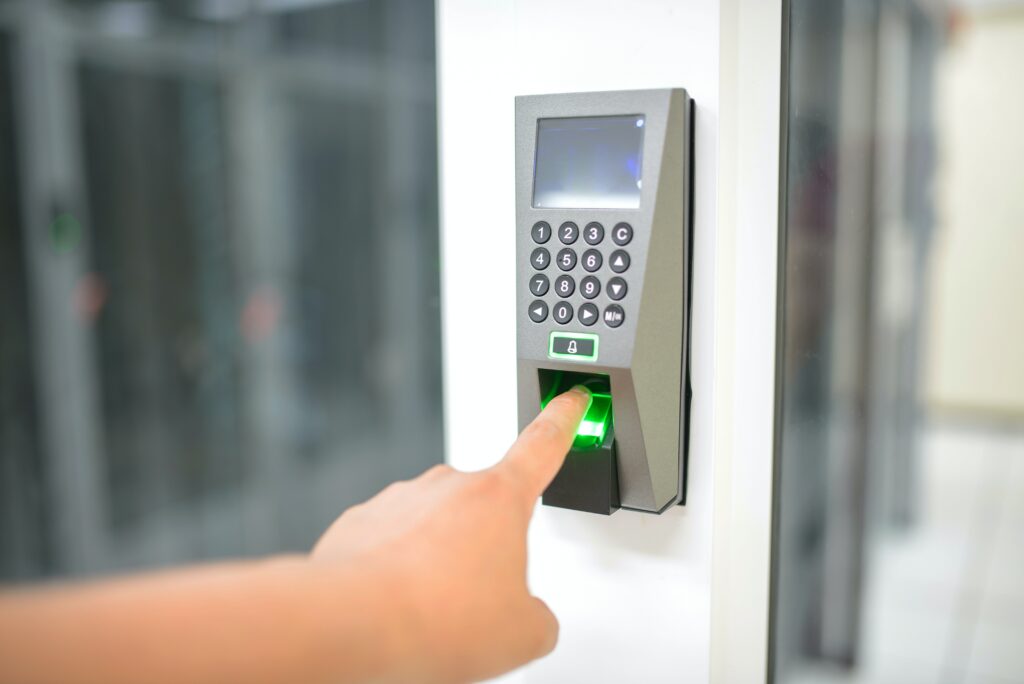
Access control systems play a vital role in securing physical spaces and ensuring the safety of individuals. Traditional access control methods such as key cards and keypads have served their purpose, but they are increasingly being replaced by more advanced and secure solutions. Biometric technology, with its ability to uniquely identify individuals based on their physiological or behavioural characteristics, is revolutionising access control systems. In this article, we will explore the future of biometrics in access control systems and the potential benefits it brings.
Biometric technology refers to the automated technology used to verify and authenticate human beings, based on their biological measurements and physical characteristics, such as fingerprints, eye retinas, voice patterns, facial patterns and hand measurements. Modern systems have evolved to be incredibly sophisticated, with the global biometric system market projected to reach significant heights in the coming years, as businesses move away from touch-based systems toward contactless solutions.
Biometric technology can be a fast and reliable way of authenticating specific individuals, which is how it is used in security. Much like the use of facial recognition and a thumbprint to access our smartphones, similar attributes can be used within a site’s security and specifically, access control systems.
You may think that biometric technology may be reserved for highly secure sites, such as banks and critical infrastructure sites, but it is also commonly used within lower security sites such as offices. Biometric technology provides an entirely new level of safety and security to places, people and assets as well as being a convenient and user-friendly way for employees and visitors to identify themselves. In high-traffic environments, such as those found in the retail sector, biometrics can prevent unauthorised back-of-house access more effectively than a shared pin code ever could.
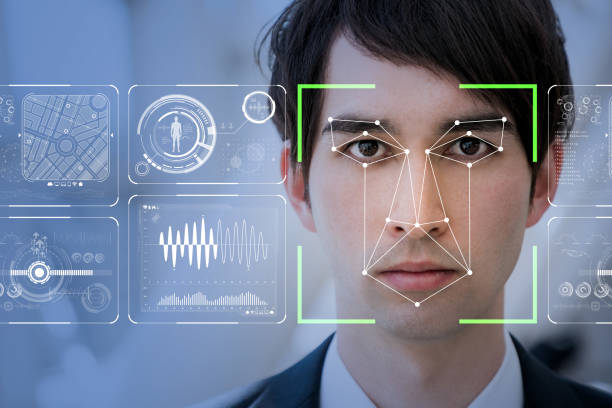
Facial Recognition System concept.
Biometric security can be broken down into three types:
When it comes to security and access control systems, they are most likely to use morphological and behavioural biometrics. Understanding what the 4 types of access control are can help managers decide where biometrics fits into their broader security strategy.
The use of biometric technology within access control systems can therefore be very effective in protecting a site and its employees, by being an accurate and reliable way of restricting access to certain areas and identifying certain individuals, thus improving the safety and security of an area. This is particularly vital in the healthcare sector, where sensitive patient records and restricted medicines require the highest levels of verification.
There are several benefits to using biometrics in access control systems, ranging from iron-clad security to operational ease.
Biometrics offer a higher level of security and authentication compared to traditional access control methods. Unlike passwords or key cards that can be lost, stolen, or replicated, biometric traits such as fingerprints, facial features, or iris patterns are unique to each individual. This makes it extremely difficult for unauthorised individuals to gain access to a site or certain locations within it and therefore by implementing biometric access control systems, businesses can significantly reduce the risk of identity theft, unauthorised entry, and security breaches. Furthermore, security system certification often takes these advanced measures into account when insurers evaluate business risk.
Biometrics in access control systems act to improve user experience, due to eliminating the need for individuals to carry or remember access cards, fobs, or keypad codes. Productivity is therefore improved amongst employees, due to not dealing with the impact of forgotten or misplaced credentials and a more seamless user experience is achieved. In office environments, this frictionless entry supports a professional atmosphere and reduces the administrative burden on reception staff.
Biometric technology has the capability to combine the requirement for different biometric traits to gain entry, such as fingerprints, facial and voice recognition. This layering of requirements acts to improve overall security and reduced the risk of unauthorised entry, as well as allowing businesses to customise their entry requirements. This multi-layered approach is one of many access control trends that we are seeing gain traction across the UK.
As technology continues to develop, access control systems with biometric technology can be integrated with the Internet of Things (IoT), as well as Artificial Intelligence (AI). This enables a more proactive approach to safety, such as integrating intruder alarms with fire safety systems. AI algorithms can now analyse biometric data in real time, detecting anomalies that might suggest a credential is being spoofed or that an unauthorised person is tailgating an employee.
Continued advancements in biometric technology will make biometric access control systems more accessible and cost-effective for sites of all sizes. The scalability of biometric access control systems allows businesses to easily add or remove users as needed without the need for physical cards or tokens. This is particularly useful for managing access control in large commercial premises, where the cost of replacing lost fobs for hundreds of staff members can quickly spiral.

Due to biometric technology using a human’s physical attributes and storing it as data, certain privacy and data protection aspects need to be considered. According to the UK Government guidance on biometrics, businesses must ensure they have a lawful basis for processing this sensitive data. Businesses that use biometrics in their security systems must make sure they are compliant with data protection laws and legislation and abide by GDPR. For detailed insights on compliance, you should review the latest ICO guidance on biometric data, which outlines the necessity of conducting a Data Protection Impact Assessment (DPIA) before deploying such systems.
The future of biometrics in access control systems is an exciting one, providing enhanced opportunities for offering security and site safety and improved user experience, as well as seamless integration with emerging technologies. We are moving toward “frictionless” entry where users can walk through a doorway without even stopping, as facial recognition technology becomes faster and more accurate. This is proving to be a game-changer for logistics and distribution centres where speed and security must go hand-in-hand. Furthermore, cloud-based security allows for biometric templates to be managed across multiple sites instantly, providing a unified security posture for national businesses.
At BusinessWatch, we’re passionate about the advancements in technology and utilising them to better protect sites, people and assets. We are implementing biometric technology into access control systems for our clients across the country and are seeing impressive results in their improved efficiencies and productivity.
If you’re interested in levelling up your access control system, get in touch with the team today to discuss your needs. Call us on 0330 094 7404 or contact us online here.


