

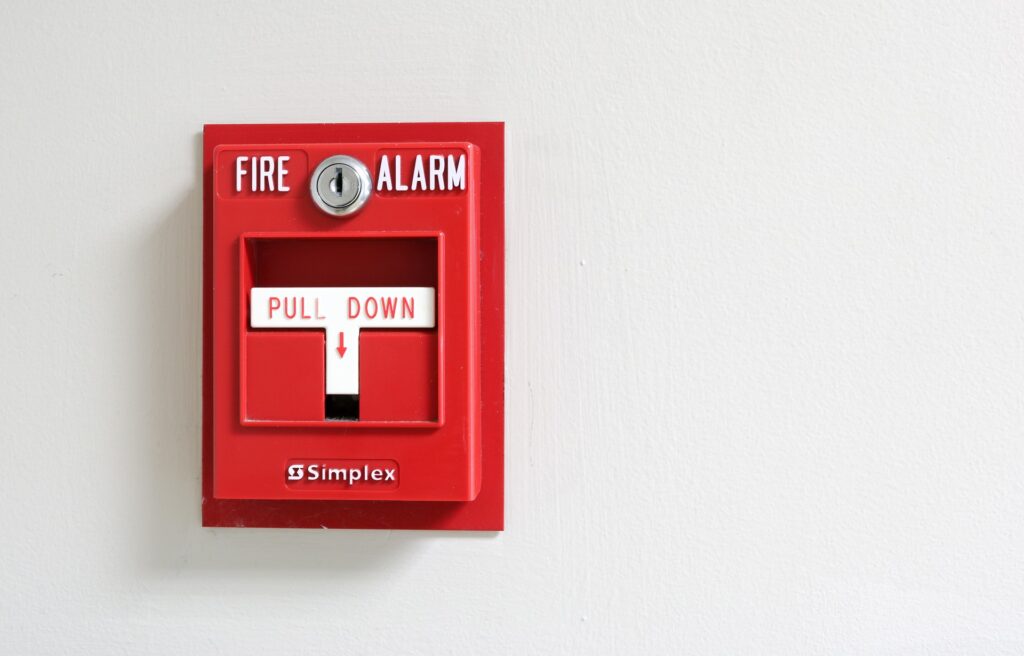
Fire alarm testing in the workplace is paramount and being prepared for emergencies is a responsibility every organisation should embrace. In order to do so, regular workplace fire drills are of utmost importance. In this article, we will share with you our invaluable tips and insights to ensure your workplace is well-prepared for potential fire incidents, creating a safer environment for all involved.
The Fire & Rescue Service attended over 165,697 fires in England in the last year. The destruction caused by these fires is directly linked to how efficiently your employees can respond to these stressful situations. Workplace fire drills can familiarise your employees with evacuation procedures, making sure they know what the correct step-by-step is which will help to reduce panic and risk. The speed at which your employees can respond to these situations can save lives. With adequate training on fire safety procedures, your staff will become more efficient in evacuating the premises.
A quicker evacuation will help to minimise the damage caused by fires and potentially save your company assets. Regular workplace fire drills are also a requirement for many jurisdictions and insurance policies as part of their safety regulations. In essence, workplace fire alarm testing is a vital component of workplace safety, ensuring the continued well being of your employees and the company’s operation. Ensuring compliance is about more than just checking a box; it is about understanding legal responsibility in fire incidents at work to protect both the directors and the workforce.

Regular fire drill testing and their consistent implementation are paramount to your employees’ ability to respond to these difficult situations. They help create a culture of preparedness within an organisation, which enables employees to respond calmly and effectively during a real fire emergency, reducing panic and potentially saving lives. Regular workplace fire drills will also help to identify and rectify potential weaknesses in your current emergency response plans.
Consistency in the implementation of these drills allows organisations to assess the efficiency of evacuation routes, the functionality of fire alarm systems and the adequacy of fire safety equipment. This ongoing evaluation ensures a safe workplace, preventing complacency and promoting continuous improvement – check out our blog on how to design a fire escape plan for your business.
Beyond simple drills, business owners should consider how predictive maintenance in fire safety systems works to ensure that alarms and sensors are fully operational before a drill or real emergency even begins.
Planning ahead is key when carrying out regular fire drills. Make sure your fire drills are booked in and that all necessary staff are aware of the fire drill dates. BusinessWatch will help your business develop a detailed fire drill plan, including fire escape plans, assembly points, and roles for staff. For more information, view our Fire Consultancy Service. Proper planning is particularly vital for specialist environments, such as healthcare facilities where fire safety requires specific considerations for patient mobility.
Education and training are key when it comes to conducting regular fire drills. Your staff must understand their importance and how it fits into their role and what their responsibility is. Fire safety training is therefore imperative, no matter the size of a business. At BusinessWatch, fire safety training courses can be adapted to your business, so you can be assured that all your employees will be aware of the drill’s date and purpose, with an emphasis on participation. You may even consider creating fire safety champions within your team to act as ambassadors for safety protocols.
Theory can only go so far. Carrying out simulation-style scenarios when it comes to fire drills will help your staff improve their adaptability and readiness. BusinessWatch can help your business learn how to vary your fire drill scenarios and test your staff’s skills. For example, blocking a primary exit with a “simulated fire” sign forces employees to find alternative routes, which is a critical skill for modern office environments with complex layouts.
Monitor and record the time it takes for employees to evacuate, aiming for improvement each time. If improvement in your fire drill response is what your business is looking for, one of our Fire Safety Training Courses will help you and your employees do just that! Speed is essential, but so is order; a rushed evacuation that leads to trips or blocked doorways can be just as dangerous as a slow one.
Activate fire alarms during drills to simulate a real emergency and familiarise staff with the sound.
Appoint specific individuals to oversee the drill, such as Fire Safety Wardens. The Fire Warden Training offered by BusinessWatch will allow your business to establish these responsibilities in order to get the most out of your employee’s response to fire drills. In larger complexes, property management teams must coordinate across different floors to ensure no zones are overlooked.
After each drill, gather feedback from participants to identify weaknesses and make necessary improvements. Did someone struggle to hear the alarm? Was a fire door difficult to open? These observations are vital for your next fire risk assessment update.
Conduct drills on a regular schedule, ensuring all employees can practise their emergency response. The UK government states workplaces should conduct a fire alarm drill at least once a year. However, many industries, such as the retail sector where staff turnover can be high, benefit from more frequent drills to ensure new team members are up to speed.

A drill is only as effective as the systems supporting it. Recent data shows that thousands of primary fires occur in non-residential buildings across England annually, highlighting the need for robust hardware. During your drill, pay close attention to the visibility of fire safety signage in the workplace. If employees are hesitant about where to go, it may indicate that your signage or emergency lighting testing protocols need addressing to ensure clear paths during a power failure or in smoky conditions.
At BusinessWatch, fire safety is our utmost priority. Hosting an array of fire safety training courses, we can help your business optimise its fire safety infrastructure and teach your employees how to conduct fire drills effectively and efficiently. Whether it’s the Fire Safety Awareness Course or the Fire Door Inspection Training Course, BusinessWatch will help you prepare for the future. With an NSI Gold accreditation and trusted by leading clients, there’s no one better to help you fireproof your business.
Call us today on 0330 094 7404 or email us online by clicking here.


