


,When we talk about fire safety the terms “active” and “passive” protection are often used, each representing a crucial facet of safeguarding lives and property. Understanding the difference between these two approaches is pivotal for creating a comprehensive business fire safety strategy. In this blog post, we will shed light on their unique roles and unravel what’s the difference between active and passive fire protection.
In recent years, the importance of these systems has been underscored by shifting regulations and a heightened focus on corporate responsibility. According to recent Home Office data, fire and rescue services in England attended over 165,697 fires, an increase of 28% on the previous, and highlighting the complexity of managing safety in modern commercial environments is increasing. Business owners must now look toward fire safety trends to ensure their premises remain compliant and resilient against evolving risks.
Active fire protection involves systems and devices that require human intervention or automatic activation to detect, control, and extinguish a fire. These systems are dynamic and come into action when a fire event occurs. This technology is often the first line of communication during an emergency, and many organisations are now choosing wired or wireless fire alarm systems based on their specific building layout. Examples of active fire protection include:
These systems use detectors to sense smoke, heat, or flames and trigger alarms to alert occupants and emergency services. To maximise the effectiveness of these units, fire alarm monitoring is highly recommended to ensure a swift response from the fire brigade even when the premises are empty.
This category includes systems like sprinklers and gas-based suppression systems designed to control or extinguish a fire by releasing water or an extinguishing agent. For sensitive environments like server rooms, gas fire suppression is often the preferred method to prevent water damage to critical infrastructure.
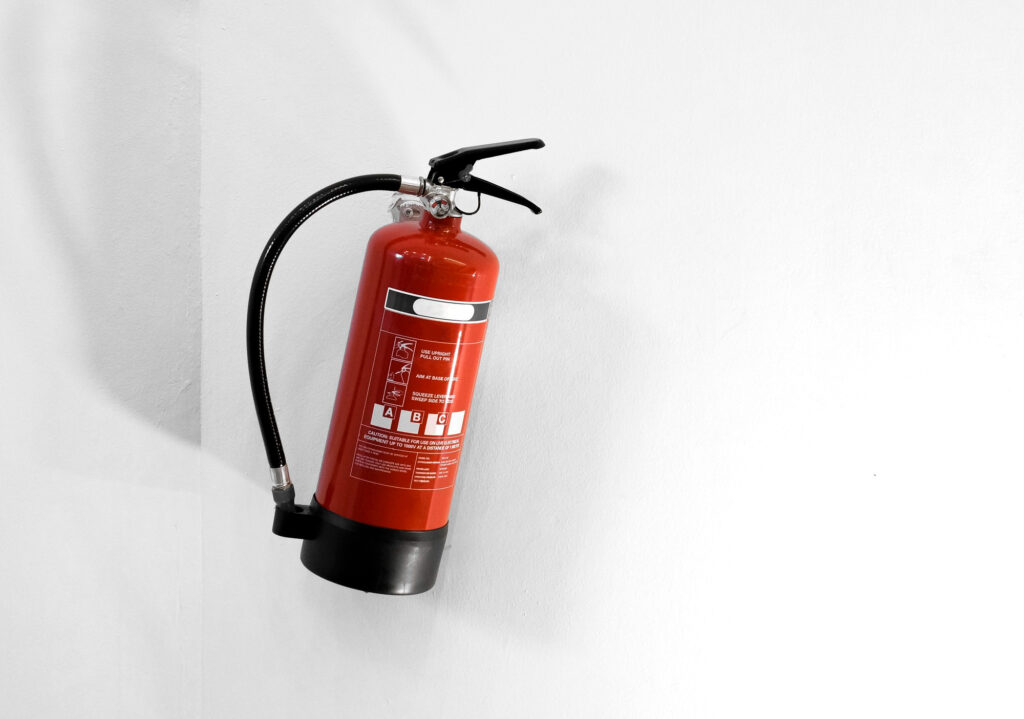
Fire extinguishers are portable devices that allow individuals to manually control small fires before they escalate. They are a direct and immediate response to a fire incident, but they must be checked regularly as regular fire extinguisher inspections are a legal requirement under the Regulatory Reform (Fire Safety) Order 2005.
Emergency lighting is essential for providing illumination during evacuations and ensures individuals can continue to safely evacuate in the event of a power outage caused by a fire. Understanding how emergency lighting can save lives is a key part of any responsible person’s training.
Passive fire protection, on the other hand, focuses on the structural and material elements integrated into a building to limit the spread of fire, smoke, and heat. These measures work automatically and act as a first line of defence. They require no human intervention during a fire, explaining why they are referred to as passive measures. Comprehensive passive fire protection is built into the fabric of the building.
Passive fire protection examples include:
Fire-resistant doors and walls are those constructed using materials that resist fire and prevent its rapid transmission and spread. They act to compartmentalise the fire to a specific area. Given the critical nature of these barriers, certified fire door inspections are vital to ensure that doors haven’t been damaged or compromised over time.
These are physical barriers that are installed within the building’s structure to seal openings around pipes, ducts, and cables to prevent the spread of fire and smoke. Fire stopping and sealing is a technical process that requires precision to maintain the hourly fire rating of a wall or floor.
Fire-resistant coatings are applied to structural elements within a building to enhance their ability to withstand high temperatures and maintain its integrity. This gives occupants more time and a greater chance of evacuating safely.
Another passive fire prevention method is the compartmentation of a building. This involves dividing a building into compartments with fire-resistant barriers to contain the fire within specific areas. Many property managers now invest in fire compartmentation surveys to identify hidden gaps in ceilings and floors that could allow smoke to travel between levels.

Although active and passive fire protection measures serve specific roles, they are most effective when integrated into a cohesive fire safety strategy and used in tandem. Active systems respond dynamically to immediate threats, while passive measures create a foundation of resilience, slowing down the progression of fire and providing critical time for evacuation. Together, they form a formidable defence against the destructive force of fire.
The integration of these systems is not just best practice; it is often a factor in insurance and legal standing. We recommend you learn more about legal responsibility in fire incidents at work to understand how a failure in either system could impact your business liability.
Furthermore, the frequency of fires in non-residential buildings across the UK indicates that warehouses and industrial units are particularly at risk, often requiring more robust compartmentation than standard office spaces. With the London Fire Brigade highlighting stricter enforcement of fire safety reforms, the synergy between your alarm systems and your building’s structural integrity has never been more scrutinised by authorities.
In the dynamic landscape of fire safety, understanding the nuanced differences between active and passive fire protection is crucial. Both are indispensable components of a comprehensive fire risk assessment. At BusinessWatch, we support businesses and organisations in implementing and managing both methods of fire protection to protect lives, property, and the continuity of business. We believe in a holistic approach that combines the strengths of both systems, fortifies buildings against the unpredictable nature of fire incidents and fosters a safer, more secure environment for all.
If you’re interested in our fire safety services, get in touch. We cover installation, monitoring, maintenance and consultancy. Call us on 0330 094 7404 to discuss your options.


