


Fire safety is a non-negotiable aspect of maintaining commercial properties. Among the various fire protection measures, fire doors play a vital role in preventing the spread of fire and smoke, providing occupants with a safe route for evacuation, and minimising property damage. Assessing the need for fire doors in commercial properties is vital, and this blog post will cover everything you need to know.
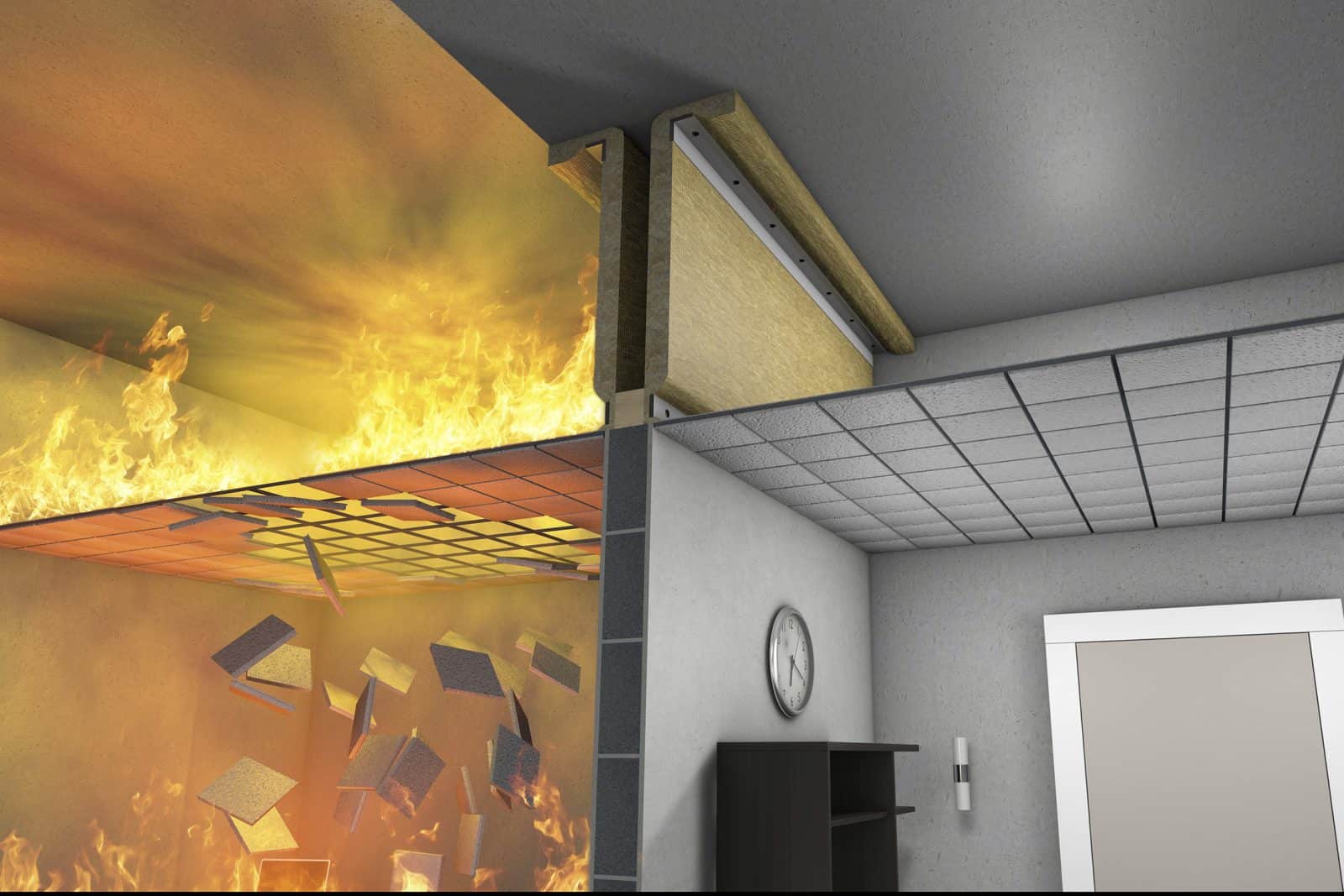
Fire doors are a form of passive fire protection that compartmentalise a building and stops the spread of smoke and fire. They are specially designed doors that are fire resistant and stop the passage of smoke for a specific period of time, usually 30-90 minutes. This gives occupants more time to evacuate a commercial property, than if fire doors weren’t in place, as they act to contain a fire and smoke to a specific area of a building.
Fire doors are made up of a door leaf, which is the main part of the door that acts as a barrier, the frame that ensures a tight fit to surrounding walls, and intumescent seals that expand when exposed to heat to prevent the spread of smoke and fire. In large-scale environments, industrial and factory settings often rely on these doors to protect high-value machinery and stock from rapid fire spread.
Fire doors help to keep evacuation routes clear and usable for a longer amount of time, and therefore are important in preventing loss of life in the event of a commercial building fire. They also give the emergency services and fire brigade more time to attend to the fire and potentially save the premises. Recent data highlights that the Fire and Rescue Services in England attended over 138,000 fires in the last year, underscoring the constant threat businesses face.
Despite this, alarming statistics show that 75% of fire safety doors fail to meet safety standards, whereby 31% failed due to improper installation. To avoid these pitfalls, understanding common mistakes when choosing a provider is essential for long-term safety.
Fire doors are a legal requirement for all non-domestic properties, such as commercial premises, businesses and other public buildings. These include:
Property owners are required to install fire doors within their commercial properties as per the Regulatory Reform (Fire Safety) Order 2005 which states that fire doors are “subject to a suitable system of maintenance and are maintained in an efficient state, in efficient working order and in good repair”. Compliance has become even stricter following the Fire Safety (England) Regulations 2022, which introduced new duties for responsible persons regarding fire door checks in multi-occupied residential buildings and high-rise structures.
There are also standards set out in the Building Regulations Approved Documents that apply to new buildings or those that have a change in use. These state that fire doors are necessary in all commercial or public buildings and must conform to BS 476-22:1987 or BS EN1634-1:2014. Failure to comply can lead to heavy fines or prosecution, which is why understanding your legal liability in fire incidents is a critical part of risk management.
The main benefit of fire doors in commercial buildings is that they protect the lives of occupants. By providing a safe passage of evacuation, the risk of injury and loss of life is reduced. This is particularly vital in healthcare and hospital sectors where patients may have limited mobility.
Containing a fire to a specific area can reduce the extent of damage on a premises, as well as give the fire brigade more time to manage and extinguish a fire. This containment prevents the total loss of infrastructure and digital assets.
Installing fire doors keeps commercial buildings compliant with regulations and building codes. Many insurance policies may also require a premise to have fire doors. Keeping up with how fire safety impacts insurance premiums can actually save your business money in the long run.

When it comes to assessing the need for fire doors for commercial buildings, there are a few steps to take.
Carrying out a professional fire risk assessment is the best way to assess the need for fire doors for a commercial property, as well as determine how many are needed and where they are to be installed.
Because every commercial building is different, the risks will vary. For example, high occupancy buildings like offices and hotels will have a higher need for fire doors to ensure safe evacuation. Buildings with a large amount of combustible materials, known as having a high fire load, will also need more robust fire protection. Those with complex layouts, corridors and rooms will also require compartmentalisation provided by fire doors. For those looking at future-proofing, exploring emerging fire safety trends can help you stay ahead of regulatory shifts.
When assessing the need for fire doors for a commercial building, it’s important to look into local building codes and fire safety regulations to determine if fire doors are mandatory. For example, the Regulatory Reform (Fire Safety) Order 2005 applies to England and Wales.
It’s also important to check a building’s insurance policy to see what is required. Many state that fire doors must be installed to meet the coverage requirements. This is a key factor for property management professionals who must balance tenant safety with financial liability.
The age and value of a building may also play a role when assessing the need for fire doors. Special considerations are usually made for historical or heritage buildings, as integrating fire doors can be challenging when taking into account the integrity of the architecture, whilst still providing the needed protection.
In addition, buildings that house valuable assets such as historical records or sensitive equipment will require enhanced fire protection to prevent significant losses, so the installation of fire doors will be key. This is why preparing for fire safety certification is a multi-step process that looks at the building’s specific usage.

After a proper assessment of fire doors comes installation. Ensure a certified professional carries out the installation of fire doors for your commercial property, to ensure they are properly fitted, tested and compliant. The London Fire Brigade recommends that only accredited professionals install fire doors and that they shouldn’t be installed by oneself.
Your installer will identify where to install the fire doors to effectively compartmentalise the buildings, such as stairways, corridors and between high-risk areas. Proper installation is the foundation of a resilient business continuity plan.
Regular fire door inspections and maintenance are essential in ensuring they are in good working condition, properly sealed and free from damage. According to Fire Protection Association guidelines, even small gaps or faulty closers can render a door useless during a fire. At BusinessWatch, we provide high-quality fire door inspections to ensure compliance with Article 17 of the Regulatory Reform (Fire Safety) Order.
Training and education on how to use fire doors are also essential in their maintenance as well as their effectiveness. Train employees and occupants on the importance of fire doors, why not to keep them obstructed and their correct use. You might also consider appointing fire safety champions within your team to ensure daily checks are conducted and doors are never propped open.
When it comes to assessing the need for fire doors in commercial properties, BusinessWatch are the ones to call. We provide high-quality fire risk assessments to assess your needs, full fire door installation and compartmentalisation, as well as fire door testing and training. Whether you operate in the retail sector or manage a large logistics hub, our tailored solutions ensure you meet every legal obligation while keeping your people safe.
Get in touch to speak to the team and to receive a free quote.


